

Postpartum swelling
01/12/25
Julia Britton
During pregnancy, the body increases its fluid volume by up to 8 litres (over 33 cups) to support the growing baby and placenta, with approximately half of this being extra blood volume.
What causes increased fluid during pregnancy?
Increased blood volume: Blood volume increases by 40-50% to meet the needs of the growing placenta and maternal organs.
Amniotic fluid: The body needs to maintain a healthy level of amniotic fluid, which increases throughout the pregnancy, peaking around 34-36 weeks.
Metabolic and hormonal changes: Increased metabolism and hormone levels also contribute to a higher fluid requirement.
Swelling: Extra fluid can accumulate outside of cells, leading to swelling in the tissues of the body, which is most noticeable in the legs, ankles, and feet.
It is important to consult a doctor if swelling is sudden, severe, or accompanied by other symptoms like severe pain or sudden weight gain, as these could indicate other medical causes for swelling.
What happens to all this fluid once you deliver your baby?
The body has a natural process of filtering and reabsorbing this fluid via the lymphatic system. The volume of fluid in your tissues can be all that has caused an overload/ back log for your lymphatic system to clear. For some women, the post-partum fluid can take some weeks to subside.
Causes of postpartum swelling:
Fluid retention: Your body accumulates extra blood and water during pregnancy to support the baby, and this fluid takes time to be removed from your tissues once you deliver your baby.
IV fluids during labor: Fluids given through IV drips, especially during a C-section, may contribute to the excess fluid.
Progesterone levels: Post-pregnancy hormonal changes can cause your body to retain extra fluid.
What helps improve postpartum swelling?
Gentle activity – your lymphatic system depends on the muscle pump to aid movement of fluid from the tissues into lymphatic vessels. Exercises like ankle pumps, and hip/knee flexion/extension can help too.
Elevation – Particularly if ankles and feet are swollen. Elevating your feet means gravity can also assist the lymphatic system to move fluid from the peripheries to groups of lymph nodes. Pop your feet up while you feed your baby!
Deep breathing – changes in pressures within the chest cavity that occur when you take a deep breath also help to draw fluid from lymph nodes making more space for fluid to move from the peripheral tissues. A great stress reliever at any stage for new mums.
Manual Lymphatic Drainage massage – This is a specialised, gentle form of massage to support the natural function of your lymphatic system.
At Physio Living our physiotherapists are trained and accredited Lymphoedema practitioners. With expertise in managing swelling, we are able to support you to navigate this incredible change to your body and life with a personalised plan for your recovery.
Dr Aoife recently had a patient who presented with postpartum swelling.
This young lady had lymphatic fluid build up persisting a few months (rather than the usual few weeks) post birth, in her back, abdomen, flanks, hips, buttocks and thighs.
Over a few weeks of treatment, we saw a dramatic improvement in fluid absorption.
Dr McGarvey used Manual Lymphatic Drainage massage, in combination with HIVAMAT Deep Oscillation Therapy.
While Hivamat is not for use during pregnancy, it is a safe and valuable adjunct for delivering manual lymphatic drainage massage post-partum.
Hivamat Deep Oscillation Therapy works by using a low-intensity electrostatic field to create a deep, gentle, and non-invasive vibration in the body’s tissues.
The patient holds a part of the device, and a second electrode is attached to the therapist, creating a therapeutic electrostatic field. This gently oscillates tissues during manual Lymphatic Drainage Massage, up to 8 cm deep, including skin, connective tissue, muscles, and lymph vessels.
This vibration helps to improve blood, vascular and lymphatic circulation, reduce swelling and pain, and relax muscles.
With weekly sessions of this treatment, along with a personalised, flexible plan for exercise, deep breathing and self-massage techniques, our client found over just a few treatments that her post-partum swelling improved significantly, leaving her more comfortable.
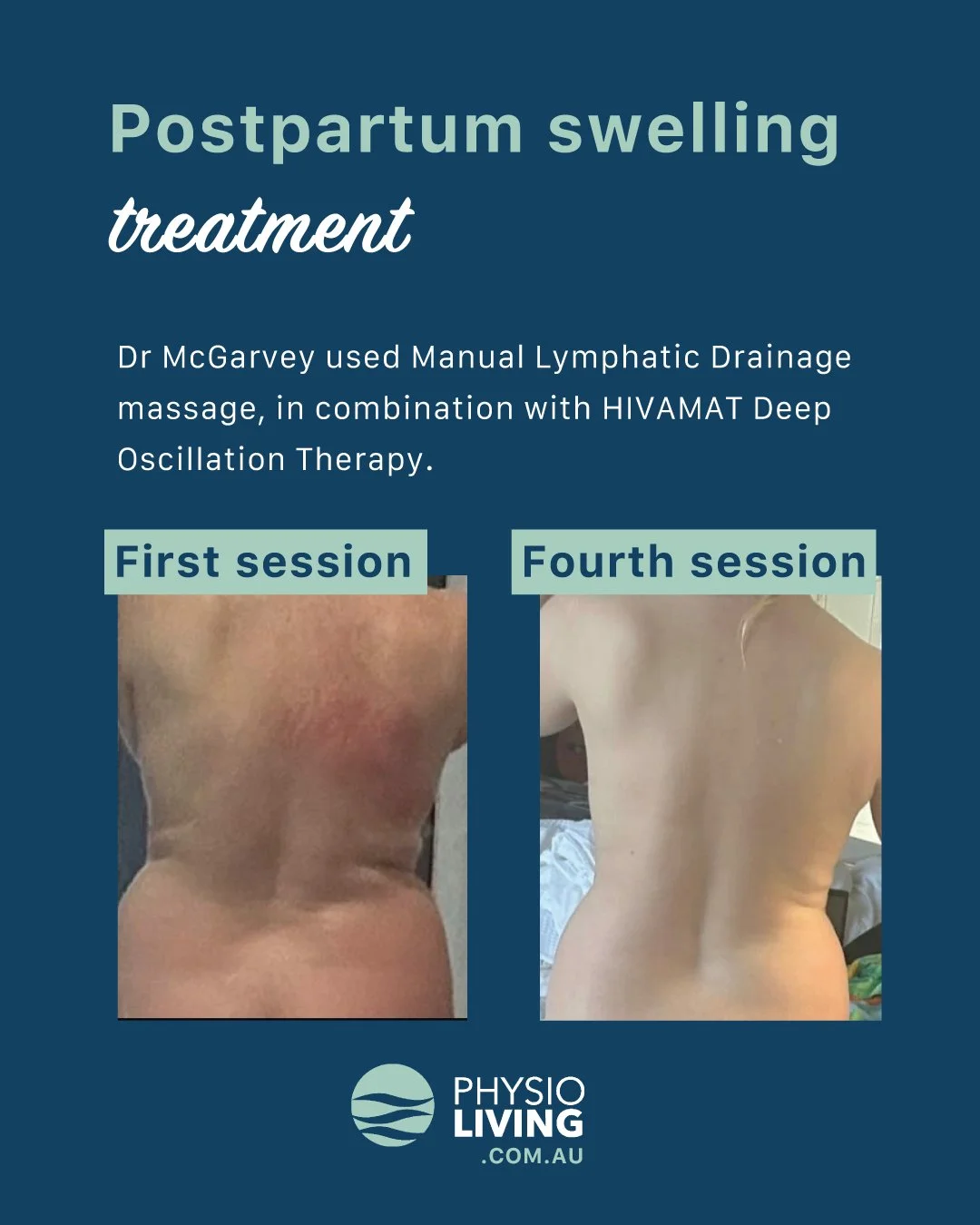
*Client consent has been obtained to share these photos and story on social media. This post does not provide clinical suggestions for other client presentations.